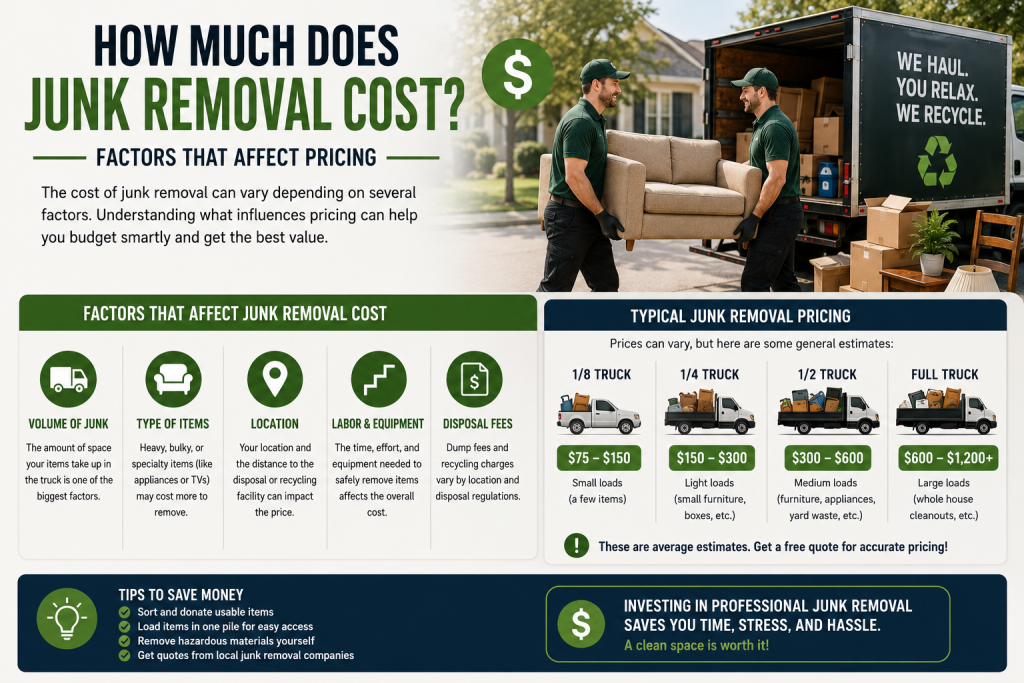

Getting rid of unwanted items sounds simple, but large amounts of junk can quickly become difficult to manage. Old furniture, broken appliances, mattresses, electronics, yard debris, and household clutter may require more than a standard garbage pickup can handle. For many homeowners and businesses, hiring a professional junk removal service is a convenient way to clear unwanted items without doing all the heavy lifting themselves.
One of the first questions people ask is: How much does junk removal cost?
There is no single price that applies to every project. Junk removal companies may calculate their fees based on the amount and type of junk, labor requirements, location, transportation, disposal expenses, and other factors. Understanding how pricing works can help you prepare a realistic budget and avoid unexpected charges.
Why Junk Removal Prices Vary
Junk removal is different from ordinary household waste collection. A professional crew may need to travel to your property, sort and lift items, carry bulky objects through the building, load a truck, and transport everything to different destinations.
Some materials may be recyclable or reusable, while others may require specialized disposal. Because every cleanout is different, companies often evaluate the size and complexity of the job before providing a final price.
Two homes on the same street could therefore receive different quotes depending on the quantity and type of items being removed.
1. The Amount of Junk
The volume of junk is usually one of the most important pricing factors.
Many companies use truck-space pricing. Under this model, the customer pays according to how much space the collected items occupy in the company’s vehicle. A small pile may cost considerably less than a full truckload.
Other providers may use item-based pricing, hourly rates, weight-based pricing, or customized estimates for large projects.
When requesting a quote, provide as much information as possible about the amount of junk you have. Photos can sometimes help a company estimate the volume before sending a crew.
2. Type of Items Being Removed
Not all junk is equally easy or inexpensive to handle.
A few cardboard boxes are relatively straightforward to collect, while large appliances, heavy furniture, mattresses, construction debris, or specialized materials may require additional labor or disposal arrangements.
Certain items may also have specific recycling or disposal requirements. Electronics, for example, may need to be taken to an appropriate recycling facility rather than mixed with ordinary household waste.
Before scheduling a service, ask whether the company accepts the specific items you want removed.
3. Labor and Accessibility
The location of your junk can influence the amount of work required.
Items sitting near a driveway may be relatively easy to load. In contrast, furniture located on an upper floor, in a basement, behind a narrow passage, or in a difficult-to-access backyard may require additional time and effort.
Stairs, long walking distances, elevators, narrow doorways, and other obstacles can affect the complexity of a job.
When requesting an estimate, explain any access challenges in advance. Accurate information helps the company prepare the appropriate equipment and crew.
4. Location and Travel Distance
Your property’s location can also influence the final cost.
Companies have operating areas, and jobs farther from their regular service locations may involve additional travel. Local market conditions can also affect pricing because labor, fuel, disposal fees, and operating expenses vary between regions.
If you are comparing several companies, make sure you compare quotes based on the same services. A lower initial estimate is not necessarily cheaper if additional transportation or disposal charges are added later.
5. Disposal and Recycling Fees
Once junk is collected, it needs to go somewhere. Depending on the materials, the company may transport items to recycling centers, donation facilities, transfer stations, or other disposal locations.
Some destinations charge fees for accepting particular types of waste. These expenses may be incorporated into the company’s overall pricing.
Responsible disposal can sometimes require more effort than simply taking everything to a landfill. When comparing companies, ask how they handle reusable and recyclable items and whether disposal fees are included in the quote.
6. Special Cleanout Projects
Some junk removal jobs are larger than ordinary household pickups.
Examples include estate cleanouts, garage cleanouts, storage unit clear-outs, office relocations, renovation projects, and property management cleanups.
Large projects may require additional workers, multiple truckloads, or extended working hours. As a result, the company may provide a customized quote instead of a standard price.
For major cleanouts, prepare a detailed description of the property and the materials involved. This can make the estimation process more accurate.
7. Timing and Scheduling
The timing of a junk removal appointment may also affect pricing depending on the company.
Some providers offer standard scheduling during normal business hours, while others may offer same-day, weekend, evening, or emergency services.
Convenience can sometimes come with additional charges. If you are flexible, ask whether scheduling during a less busy period can provide a more favorable rate.
However, pricing policies differ, so always confirm the company’s current terms before booking.
How to Get an Accurate Junk Removal Quote
The best way to understand your expected cost is to request a detailed quote.
Start by making a list of everything you want removed. Take photographs of large piles, furniture, appliances, and other bulky items. Mention stairs, elevators, long distances from the property to the truck, or other access issues.
Then ask several companies for estimates and confirm what each quote includes.
Important questions include:
- Is labor included?
- Is transportation included?
- Are disposal fees included?
- Are there additional charges for heavy items?
- Does the company charge by volume, weight, time, or individual items?
- Are there minimum service charges?
- Which materials are excluded?
Getting these answers in advance can make price comparisons much easier.
Ways to Keep Junk Removal Costs Under Control
There are several simple ways to make a cleanout more efficient.
First, separate items you want to keep from everything scheduled for removal. This prevents unnecessary sorting time.
Second, donate or recycle appropriate items before the scheduled pickup if you can do so conveniently.
Third, consolidate smaller items into boxes or organized piles where practical. This can make loading faster.
Finally, avoid waiting until the last minute. Emergency or rush services may have different pricing than standard appointments.
Final Thoughts
Junk removal costs vary because every project is different. The amount of junk, type of materials, labor requirements, accessibility, location, disposal needs, and scheduling can all influence the final price.
Rather than choosing a company based solely on the lowest advertised rate, look for transparent pricing and clearly defined services. A reputable provider should be able to explain how its estimates are calculated and identify any potential additional charges.
With a little preparation and several comparable quotes, homeowners and businesses can better understand their junk removal expenses and choose a service that fits both their needs and their budget.